Wednesday, November 24, 2010

Flying Over Africa


After over a day of flying and crossing major time zone changes, we are finally approaching our destination - Kilimanjaro Airport. As we were flying over Africa, we were welcomed by a lovely sunset.

By the way, flying over the desert looked pretty cool but I don't know why I did not get a picture of it. I was second from the window seat and I think I recall that there was too much sun coming in the window.

Tuesday, November 16, 2010

Cancer Climber Founder Sean Comes to Town


It is about due time for a reflective post. I decided the above title topic would be a good one to tie in with the Kili trip story and how Sean Swarner fits into all of this. If you do not know because you don't know me well or have not been paying attention, Sean is a HUGE source of inspiration for me. His altruistic example really ignited the fuel for this path that I have followed for the past 5 years.

Flash back to spring 2004 when everything came to a screeching halt. I think God had something bigger in store for me which took me a few years to see. I was about to graduate from the University of Washington Masters in Teaching program for science. Although I was losing A LOT more hearing and feeling increased pressure in my head, I was eager with plans to continue onto the next phase of life with my peers. I had it all worked out.....have fun teaching throughout the school year subjects I love (preferably my dream classes of marine biology, oceanography and geology someday), spend the summers traveling and engaging in diving research/educational projects abroad, start training to become a mountainier and of course do more diving in the PNW. It sounded like the perfect plan and life. ;-) But then on the day of my final graduate presentation, on our way to the University, Harley and I recieved the news that one of my slowly growing tumors had increased in size by a WHOPPING 1 cm. Since diagnosis in 1999, the tumor had only grown a minimal of 0.5 to 2 mm on a yearly basis. Thus, 1 cm was ENORMOUS!

I think I made it through my presentation because my mind was simply unable to comprehend the seriousness of the situation. I couln't grasp the very REAL possibility of life changing as I had known it along with my perfect plans. Aside from a problem with my lips sticking together while speaking - maybe it was a combination of nerves combined with subconcious worry over my medical future that brought on a horrible case of dry mouth - I made it through the day relieved to be finished and on my way to getting the degree I had worked so hard for over the last 2-3 years.

Immediately after graduation, we left out of country on a trip we had planned. Therefore, we were able to further delay thinking about the gravity of what was about to happen. When we came back, a decision had to be made neither of which was simple. We could no longer decide to do nothing and a definite treatment had to be chosen. For fear that surgery would either kill me or leave me with worse......permanant life altering damage, I chose the radiosurgery route. I thought it would be the easier of my choices with very minimal side effects and a fast recovery time.

Easy nor a quick recovery was not to be! I could write a very long post about all that has ensued over the following months and years but I will save you the time and space to give you a brief synopsis......

Instead of being hit with very bad side effects immediately after like chemo, I was hit with waves that dragged out and continually changed and worsened over time. At least for me, when I went through chemo for cancer 17 years ago, the beginning hit me the hardest and when I was the sickest (1/3rd into it). A point finally came within the 6 months of treatment where I began to feel better and hope seemed brighter. I started to get back to the person I was before the chemo. It is not so for NF2.

First of all, I told you that I was losing hearing. On the third day of treatment I was rendered permanently and completely deaf meaning unable to hear the loudest of sounds such as thunder, a bomb, and a rock concert. Now that might not seem so bad. In fact I now view it as a minor annoyance at times. However, to be raised within a society dependent on hearing and abruptly thrown into a world of not being able to percieve sound anymore takes a great deal of adjustment. There is not total silence because the brain often creates tinnitus which is ringing in the ears that can take on the most maddening sounds! One must learn to channel out the distraction and rely on other senses in order to function and fit into society again. It can be overwhelmingly stressful.

Hearing loss was not even the half of it! Over the next several months my balance function deteriorated, my eyesight and facial function decreased along with memory and comprehension, and I experienced bouts of sickness and fatigue. For a long time, YEARS, I could not even feel my feet and fingertips nor cry. It was quite an ordeal to tough out and one that left me vulnerable and on the verge of losing hope. Unlike my 7 month cancer experience, things continued to DIGRESS instead of PROGRESS. I also looked pretty horrible within the first year from taking steroids over such a long period leaving me with weight gain, bloating, acne, teeth crumbling, and my face swelled up like a water balloon. To say I was heartbroken is an understatement. I was DEVASTATED!

But anyway, back to how I got out all of this.....Finally almost a year later the radiated tumor stopped swelling and I got off the steroids. With medication for my eyes and no longer needing to depend on steroids to function, I began to have some improvement.

One day a letter came from the Leukemia and Lymphoma Society with Sean's story about surviving 2 cancers as a kid both of which he was given a very poor chance for survival (3 weeks to live for the first cancer). Against the odds he surprised all and grew up to become an accomplished mountainier. With partial lung capacity, he climbed the tallest mountain in the world - Everest - to bring inspiration and hope to everyone affected by cancer.

When I read that I felt moved. I had the desire to inspire others the way he had inspired me to come out of the darkness. Sean had the same cancer I had. Surely if he could survive through a terrible ordeal AS A KID and live to do something superhuman for a very meaningful purpose, I could get off my self pity duff and do something too.

At the time, my grandfather was diagnosed with another cancer after 14 years of remission. Only this time the second cancer was eating him away very quickly. I felt helpless as I lived all the way across the country. Motivated by Sean's example, I chose to take on something I could do which was my participation in the American Cancer Society's Relay for Life in my grandfather's honor. If I could not save him, at least I could help save others by fundraising for research and patient education and support. What was to be my participation in a team flourished into me being team captain leading the team voted with the most spirit at the event.

Over the years I followed Sean as he climbed the tallest mountains on each continent carrying the names of cancer patients on a flag he buried at each summit. In fact, my friend Skip, my grandfather, and I are on the flag of his final 7 summit tour on Denali in Alaska. I sent texts of encouragement to their team and followed their progress on his foundation website, Cancer Climber.

Part of what his foundation has done in addition to funding research scholarships, is providing adventure grants to young cancer patients. One grant was honored to a boy with brain surgery who climbed Mt. Whitney on crutches! Wow! To me that was most incredible and unbelievable! After learning that someone could hike with crutches, I started to believe that I could hike again with hiking poles if I worked really hard to overcome my balance dysfunction. So little by little I began to slowly get into hiking again over the years - LOTS of walking, some running, and an easy hike or 2 a year, easy being usually an accessible path or trail for MOST senior citizens and young kids.

In fall 2007 I had my first brain surgery which provided me with many improvements. Granted I was far from being 100% restored but I could cry again, feel my fingers and feet again helping compensate for my loss of hearing, and the swelling which endangered my eyesight was gone. Further, I joined the gym and strength training combined with water aerobics greatly improved my stability. I was enjoying feeling better.

Following over a year of things FINALLY progressing, the idea of climbing Kilimanjaro reawakened as perhaps a possibility one day. On facebook, friends were sharing their bucket lists and Kili was on the list of my NF friend in Austrailia. Openly I admitted I wanted to climb it too and commented how it would be very cool for us to climb Kili together in support of NF. She has NF1 and I have NF2. It is kind of funny because at the time, I was VERY FAR off from being ready to do it. I had not even REALLY gotten back into hiking yet. That would start in June 2009 after I finished training to run my first half marathon.

Somehow on facebook Sean got wind of my desire and was leading a Kilimanjaro trip in summer 2009. He sent me a message about knowing I want to go which made me further believe that it could be possible. However, there was no way I was prepared to go within a few months. First of all, I was told in April 2009, only a week or 2 before my half marathon, that I needed another brain surgery. :( Argh! Second of all, I was not conditioned for that kind of hiking nor would there be adequate time for me to train even if I did not have to get brain surgery.

So I spent the summer hiking with my cancer survivor friends and having fun before possible impending doom of the surgery. I dragged it out and delayed the surgery as long as possible deciding October would be a good time to have to be laid up. LOL We did however have in mind Kilimanjaro going into surgery. My surgeon was confident I would be able to tackle it. It all hinged on how I fared through the surgery and coming out of it. Perhaps that is another incentive that kept my atitude positive and my will to live strong.

A few weeks ago, I had the blessed opportunity to meet Sean in person and see his presentation at the Children's Hospital in Seattle. Another fantastic treat is that I got to see footage of him burying the cancer flag bearing the names of my grandfather, my friend Skip, and me on Mt. Denali in 1996 when he completed his climb of the "7 summits" - the highest mountain on all 7 continents.

Thank you Sean for all your inspiration, motivation, and fine example! You are a hero! :)

Before and After 18+ hours in flight


Obviously the bottom photo is off us before we took off from Seattle. The top 2 photos are of Harley and I during a short layover in Amsterdam. Note how Harley's energy has remarkedly decreased. LOL I don't know if he even slept on the first flight. So by the time we reached Amsterdam he was coming down.

Wakey Wakey! We're landing in Amsterdam!


Check out the dude passed out behind Ron!

Sunday, November 14, 2010

Zonked Out!


Here is something else you will not catch in the film. While the 3 of us were like kids hyped up on a sugar high, our producers were wisely catching some Zzs.

Merrie finally crashed and burned. She doesn't even have her head in the headrest anymore! LOL

Danger! - Long flights can lead to ridiculous silliness


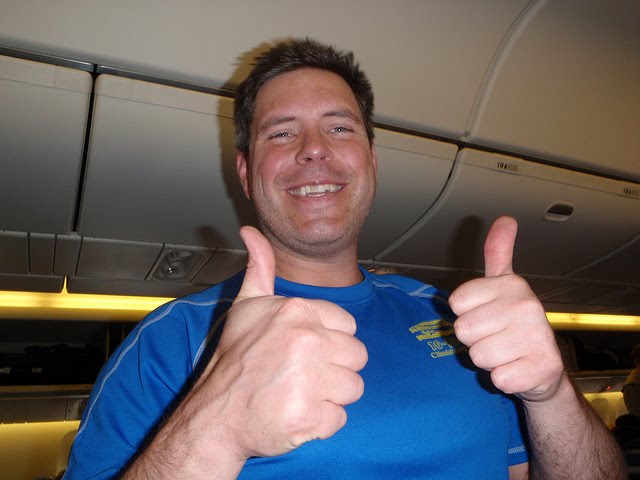
Can you believe this? LOL We must have gotten really bored that we sought amusing entertainment by putting a plastic bag on our heads! This is what people used to being up and working out do when they are confined to a seat squished between others for hours. As I said earlier, I think Merrie and I were wound up from eating chocolate. I do not know if Harley had any, but he was pretty wound up anyway about the trip like a kid on the way to the fair.

I do not even recall the guy sitting next to me on the plane! His jean jacket is vaguely familiar now that I see the photo but what his face looks like I have no clue.

Saturday, November 13, 2010

Flight to Amsterdam is now boarding


The international flights are on the Big Boy planes complete with 2 isles and tv's in every seat. Right away Merrie and Pedro prepare for the long flight ahead by occupying themselves with reading material.

Friday, November 12, 2010

Shiney Happy People Holding Hands


See what I mean? This is Chris and Shane. What a happy looking couple! They are very photogenic and always look great together.

The picture where Shane is wearing a green jacket is right before take off from Seattle. With my vision impairment, I cannot always tell if I have taken a clear photo which mostly is an indicator of whether I had it on the right setting. Hence, a fantastic shot turned out blurry!!! Yet it is such a lovely photo of them that I had to include it.

The 3 photos are from various points of the trip on BOTH flights! They seem to have this jet lag thing down pat. Although Chris does have experience as in the earlier years of his prior business, he spent 5 years traveling to so many countries that I cannot remember the exact number! That is pretty incredible. So he is somewhat of an expert. Further, he and Shane are meticulously organized people. They have 3 small children so they are highly efficient. - some lessons Harley and I could take. :)

Feel the Excitement


I am going to back up a moment and deviate from the journal entries to do a little recap and filling in of energy caught on film. As you will see, the entire team was filled with excitement and anticipation for the trip and long journey ahead of us.

Here are some great shots of Harley, Pedro, and our guide Tim grinning from ear to ear. This is right before we were taking off out of Seattle heading for Amsterdam. I think Harley was WIRED and ESTATIC. Tim, the pro at this having been to Kilimanjaro 5 times, one of which being his honeymoon, was all set for flight to start out with a good movie and some tunes with the headphones on. As you will see in later photos, Pedro and Merrie occupied themselves with reading material in between watching movies and occasional bouts of sleep (we know because they were in the seats directly in front of us).

Chris as you will see with Shane, well he is ALWAYS smiling. In fact I used that as his name sign - The letter C moving up from the middle of the mouth to form a HUGE smile. Patrick, who we met later, also is always smiling. I think the only time I caught them both with a serious straight face is when Tim was debriefing the team about the summit push before he went seperate ways with the team to accompany me back down the mountain on day 4.

So right out the gate, the enthusiasm and energy of the team was magic! These are truely GREAT people! Harley and I feel so blessed to travel and climb with such a wonderful caring team grateful to help this cause - Wow! Every team member contributed a significant financial and time investment to make this expedition and movie happen. It is really amazing! What an honor to be graced with all of their involvement!

Tuesday, November 09, 2010

It's REAL! - Merrie's Journal Entry


Written October 2nd, 2010 on the flight from Amsterdam

We're going to AFRICA!! Hard to beleive considering we never even dreamed of going to Africa let alone climbing Mt. Kilimanjaro before meeting Becky and Harley.

Embarking on this adventure is exciting and being a part of Becky's dream is an honor. I'm so thankful for this oppotunity to be a part of something greater than myself.

Wednesday, October 27, 2010

The Journey Begins!


Left to right at the Amsterdam gate to Tanzania: Harley, Merrie, Chris, Shane, and Pedro


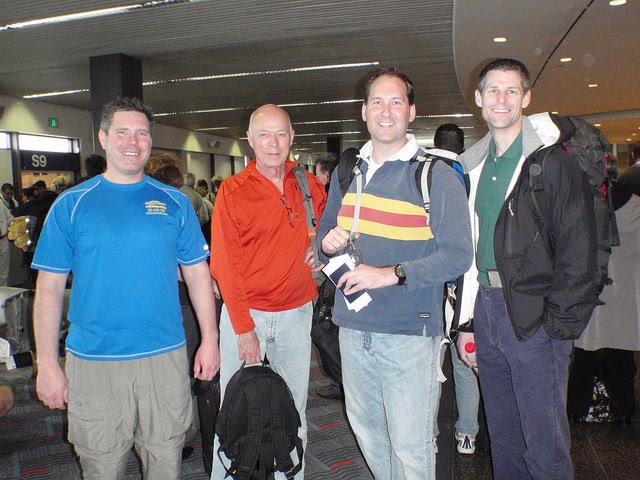
Left to right: Harley, Dave, our guide Tim, and Jason (Ron and Eric are missing and must be grabbing a coffee or something; Patrick met up with us in Africa)


October 2nd, 2919 3:14 am Seattle time

Day time on the flight from Amsterdam, our second flight on the trip - flight from Seattle to Amsterdam and then Amsterdam to Tanzania.

We are roughtly at 31,000 feet and flying over some fantastic mountain peaks I can see from the plane window. It appears we are still flying over Europe so I assume those are the Alps I could love to visit again someday.

The flights are going well for the team. We are now on our 2nd flight from Amsterdam to Tanzania. Our first flight was out of Seattle at 1 pm to Amsterdam and was roughly 9.5 hours. Harley took some ambien and passed out on me! Chris got a picture. Shane and Chris stayed up with plans to be read to sleep when we reach the hotel in Tanzania where it will be night time. Ron and Tim were sleeping when we did a pass by. Pedro slept a little bit and Merrie and I slept for a short time. I think she and I are slightly wired from consuming our beloved chocolate!

I started out sick at the beginning of the flight after taking the malaria medication. I think perhaps I did not have enough substance in my stomach and it reacted with my stomach acids. After eating some chicken meal I felt better.

Flying internationally is pretty cool because they still give you a blanket and pillow as well as a free drink (and FOOD!!!). So I had a wonderful glass of white wine on the first flight over and a miniature bottle of white sauvinghon blanc-chardonay mix from Chili on the second flight. (I remember reading on the second flight about how they feature certain wines from different parts of the world on the flight out of Amsterdam). Harley had a red wine and coke which Merrie told us is a very popular drink in Columbia where Pedro is originally from.

I am more excited how that the team is together and we are underway. Prior to our depature I have been very focused on training, trying out gear, and anxious over the remaining fundraising left to do.

Dana Milkie, the VP of Gold's Gym NW, through us a lovely send off party which was an excellent way to unwind before we left as well as a distraction from trip anxiety. I know how physically and mentally challenging this climb will be for me.

The day before we left I further got into de-stress mode by getting a fantastic massage from Koko at the gym spa, going tanning to get in some Vitamin D treatment, and taking the dogs for a walk to Lake Sammamish.

Thursday, October 21, 2010

Celebrating Gains - 1 year surgeryversary


I am pictured here with Afrian guides Freddie and Gabriel who were my "angels" instumental in getting me up the mountain which you will see in video to come.


Harley and I during a short break on the way to Baranco Wall camp


My trainer and friend Merrie Veico and I at the Baranco Wall camp at the goodbyes before we had to part - she for the summit and I back down to the gate


I'm back! It was a long flight home that took alot out of us. It has taken me a few days to just get readjusted to the 14 hour time difference and get over some VERY serious jet lag. Today is about recovery as last night I suffered chills and an excruitating headache which lasted from 3:30 am until the late morning.

Anyhow, to get back to training after days of sitting on my butt during travel, I went for a slow 4 mile run Monday night, followed by a mile walk and 2 mile run around the dog park to ease into it on Tuesday night, 1 hour with my trainer Merrie yesterday and a 6 mile run in 1 hour 1 minute following.

So what is the news you all have been waiting for?????

Did I reach the summit of Kili (Kilimanjaro)?

If you are a facebook reader you already know the answer. If not, I regret to inform you that I did not. I made it through 3 days of increasingly difficult terrain to an elevation higher than Mt. Rainier and then down to the 13000 ft camp next to Baranco Wall. I was ready to continue on the morning of day 4 but due to the extreme difficulty of the terrain ahead and lack of adequate time for me to safely desend 9500 feet after pushing a 4500 summit ascension, our guide made the very difficult decision to send me back down. It was very emotional for the team and many tears and hugs were shed. I plan to share with you per day my journal writings during the trek.

To be honest, it has taken me some time to get over it. Yesterday I recieved an affirmation that really put things into perspective for me. Putting aside from pride that was wounded, I must be proud of accomplishing the main objective and be very grateful that the Lord blessed us by keeping everyone on the team safe and free of harm. Above anything, the safety of my team was of the utmost importance. That is what I asked for and happily that is what I recieved. The night before I was sent down I did pray to summit but in the end I wanted everyone to be safe and told the Lord "Your will be done.". I trust in his decision. I believe now that it played out exactly as it was supposed to.

Let me share with you the light he answered me with yesterday morning:

You do not have, because you do not ask God. When you ask, you do not receive, because you ask with wrong motives, that you may spend what you get on your pleasures.
James 4:2–3


In the interest with what I was trying to accomplish by doing this climb - to bring awareness to NF2 and how it affects people - it was actually best for me to not summit. I am extremely rare among the population of those affected by NF2 to even have the luxury of hiking let alone attempting Kilimanjaro. Yet, I felt moved in my heart that someone with NF2 had to attempt something great in order to show people NF2, make them aware of it, and make it real for them. Hence, I became driven to the task of giving my all on the only largest mountain in the world I could have a fighting chance of climbing. It has taken me 6 long years to work up to this point - lots of training and not giving up.

Before I could fully grasp the magnitude of what I was setting out to do, God guided me in making a movie to show the world. Through the movie, people will relive my struggle to overcome obstacles, accept disappointment, and seek ways to adapt to what has been taken away. My aim is to show the world NF2 but also to inspire and give hope. Making it look too easy if I had summitted would give the false impression of how NF2 really affects people. By seeing my struggles and the limitations NF2 has put on me, it will help you to understand the devastation of this disorder.

So about reaching the summit, it was not of importance when you look at the big picture and everything I have managed to gain and accomplish less than a year from major brain surgery on 4 tumors.

Can the hundreds of those with full physicaly acuity say the same?

Looking back, what have I done?

Walked a half marathon only 39 days post surgery in memory of a recently departed friend due to Leukemia and in support of NF2
Raced to top of the tallest tower in the city, leading a team in support of blood cancer
Ran my second half marathon nearly 10 minutes faster than my first all while raising money for NF research
Ran and hiked numerous miles with thousands of feet of elevation gain to train which is not a walk in the park with my vision and balance impairments
Motivated a team in support of NF2 to accompany me to Africa to climb Kilimanjaro

I may have not reached the summit but I climbed higher than Mt. Rainier and higher than most people will ever do in their lifetime.

So given that, I have lots to be very thankful for. I have had a miraculous year of recovery and I hope that I have given back by doing the absolute best I can in fullfilling the purpose God has intended me for.

Sunday, October 03, 2010

Help Stop NF2 in Africa

Hello all!!! It has been a long time since my last post. I have been busy all summer training for the biggest challenge of my life yet which is to attempt a summit climb of Mt. Kilimanjaro in Africa - 19340 feet!

We have a great team of 10 climbers plus our guide with intentions to summit on 10-10-10. The mission is to inspire the world by overcoming the challenges NF2 presents me to follow my dreams and in by doing so bring awareness of the disorder Neurofibromatosis through the movie a Seattle producer is making of our adventure.

So here we are! It is really happening! It was on our honeymoon 10 years ago in October 2000 when I first conceived of such an endeavor with the intention to bring awareness of my disorder NF2 to which we nor family and friends had ever heard of. Back then I was quite normal aside from a little hearing loss. Now however, is quite a different story as my vestibular system is shot - meaning no balance and my vision impaired which I depend on for keeping my stability. Therefore, to be here now is incredibly meaningful.
It is miraculous actually and I will be the first NF2 patient - and perhaps first person living with brain tumors to attempt this.

OK. We climb tomorrow and have a gear meeting shortly that I need to prepare for. I'll try to write again later today before we leave on the trek for the next week.

Please keep the safety of the team in your prayers!

Sunday, September 05, 2010

Living with Pain

I am EXTREMELY lucky in that my life with NF has been for the most part pain free (of course as expected there is a short period of pain after surgeries and I had some minor neuralgia in the extremeties after radiosurgery and a 2 week episode of severe facial trigeminal neuralgia before my first brain surgery).

I have come across many reports however of both people with NF1 and NF2 experiencing chronic pain (it seems more common among NF1).

While I cannot give advice on how to deal with it, I can tell you that a few people have personally told me that either they experience relief or a lessening of symptoms following acupuncture treatment.

Recently, an NF2 mother who is a pretty strong advocate for our cause, posted a recent article about how acupuncture has proven useful in lessening or treating symptoms or side effects of cancer treatment.

Here is the direct link to the article I have included below:

Acupuncture Effective in Treating Side Effects

Acupuncture Helps Ease Side Effects and Symptoms of Some Cancers
Released: 9/3/2010 8:00 AM EDT
Source: Memorial Sloan-Kettering Cancer Center

Newswise — Recent studies have shown that acupuncture can help control a number of symptoms and side effects -- such as pain, fatigue, dry mouth, nausea, and vomiting -- associated with a variety of cancers and their treatments. Experts from Memorial Sloan-Kettering Cancer Center's Integrative Medicine Service, who have either conducted or reviewed many of those studies, recommend that cancer patients interested in acupuncture seek a certified or licensed acupuncturist who has training or past experience working with individuals with cancer.

Acupuncture

Acupuncture treatment, a two-thousand-year-old component of traditional Chinese medicine, involves stimulating one or more predetermined points on the body, called acupoints, with needles for therapeutic effect. Heat, pressure, or electricity may be added to intensify the effect of the acupuncture needles. According to traditional Chinese medicine beliefs, energy flows throughout the body along channels, or "meridians." Specific acupoints are stimulated to increase energy flow along various channels throughout the body to a particular tissue, organ, or organ system.

Treatment is usually customized to treat each patient's particular symptoms. A typical acupuncture session, which takes about 30 minutes, involves the insertion of ten to 20 very thin, stainless steel needles. Most patients receiving acupuncture experience no pain from the insertion of the needles, and there is minimal risk of injury from acupuncture treatments, with reports of fewer than one adverse event in more than 10,000 treatments.

According to the Centers for Disease Control and Prevention, each year more than eight million Americans use acupuncture to treat different ailments. Studies have demonstrated its effectiveness in the treatment of a host of non-cancer-related health issues, such as back pain, chronic headaches, osteoarthritis, high blood pressure, infertility, and hot flashes. Its use for the treatment of symptoms and side effects of a variety of cancers has recently been investigated in a number of studies and reviews.

Acupuncture for Head and Neck Cancer

For many of the more than 100,000 individuals diagnosed with head and neck cancer each year in the United States, the cancer spreads from its primary location to lymph nodes in the neck. When this occurs, nerves known as spinal accessory nerves must also be removed along with the affected lymph node, which can lead to shoulder function problems.

A study conducted by Memorial Sloan-Kettering investigators and published in the April 2010 issue of the Journal of Clinical Oncology sought to determine if acupuncture could reduce pain and dysfunction in individuals with cancer of the head or neck who had received a surgical dissection of lymph nodes in their neck. The study evaluated 58 patients who were suffering from chronic pain or dysfunction as a result of neck dissection. For four weeks, study participants were randomly assigned into one of two groups: those receiving weekly acupuncture sessions and those receiving standard care, which included physical therapy, as well as pain and antiinflammatory medication.

The study found that individuals in the group receiving acupuncture experienced significant reductions in pain and dysfunction when compared with individuals receiving standard care. Individuals in the acupuncture group also reported significant improvement in xerostomia, a condition in which patients receiving adjuvant radiation therapy experience extreme dry mouth.

Acupuncture and Leukemia

Many people with leukemia try additional treatments outside their standard care, hoping to manage symptoms and, in some cases, to improve their treatment outcome. In a commentary on the subject in the September 2009 issue of Expert Reviews Anticancer Therapies, Memorial Sloan-Kettering investigators examined the results from available studies testing the effectiveness of such approaches. They report that among the complementary therapies used to decrease symptoms and side effects, acupuncture is very beneficial for symptom management.

For some leukemia patients, cancer chemotherapy drugs can damage the peripheral nervous system (a condition known as peripheral neuropathy), causing pain, numbness, tingling, swelling, and muscle weakness in various parts of the body, especially in the hands and feet. In some cases, doctors must reduce the chemotherapy dose in order to prevent the neuropathy from progressing further. Acupuncture has been found to decrease these difficult neuropathy symptoms, allowing the maximum amount of chemotherapy to be used, thereby increasing the patient's chance for a successful outcome.

Acupuncture is also known to reduce the effects of nausea caused by a variety of chemotherapy agents used to treat leukemia. Research has shown that timing the acupuncture sessions one to two days before chemotherapy infusion and continued weekly throughout the chemotherapy regimen produces the best results. In addition, the authors note that acupuncture has been proven safe for patients receiving the anticoagulation drugs Coumadin® or heparin during their leukemia treatment.

The review's authors note that, in general, it is important to distinguish between complementary therapies -- including acupuncture, self-hypnosis, yoga, meditation, and therapeutic massage -- and alternative therapies, which are unproven and ineffective, and may interfere with mainstream cancer treatments.

Acupuncture and Breast Cancer

A significant number of breast cancers have receptors for the hormone estrogen. These receptor-positive breast tumors are more likely to respond to therapy with anti-estrogen medications, which take advantage of the cancer cells' dependence on hormones for growth. Women with these tumors are often given treatment that blocks the production of estrogen, which is meant to slow the growth of the tumor. These treatments can induce early menopause, leading to symptoms such as hot flashes, fatigue, and excessive sweating. Because these women cannot receive hormone replacement therapy, which is usually used to treat such symptoms, doctors typically prescribe antidepressants such as the drug venlafaxine (Effexor).

A recent study examined whether acupuncture reduces some of these common side effects and produces fewer adverse effects than antidepressants. In the study, published in the February 2010 issue of the Journal of Clinical Oncology, 50 women with hormone-receptor positive breast cancer were assigned into one of two groups. The first group received 12 weeks of acupuncture, and the second group received treatment with venlafaxine.

Both groups experienced significant decreases in hot flashes, depressive symptoms, and other quality-of-life symptoms. However, women in the group taking venlafaxine began to re-experience their symptoms about two weeks after stopping drug therapy. In comparison, it took 15 weeks for the symptoms to return for women in the group receiving acupuncture. In addition, women in the acupuncture group reported no significant side effects during treatment, while the group taking venlafaxine experienced 18 incidences of adverse effects, including nausea, dry mouth, dizziness, and anxiety.

Finding the Right Acupuncturist for Cancer Patients

The National Certification Commission for Acupuncture and Oriental Medicine (NCCAOM) provides a list of practitioners who are nationally certified in Oriental medicine, acupuncture, Chinese herbology, and Asian bodywork therapy. The Integrative Medicine Service at Memorial Sloan-Kettering Cancer Center has trained thousands of acupuncturists from across the United States and many other countries. Its previously face-to-face, three-day courses were replaced in April 2010 with Internet-based courses to facilitate international requests. The Integrative Medicine Service also maintains a list of cancer-trained acupuncturists. Our integrative medicine specialists stress the importance of using an acupuncturist who is NCCAOM certified or licensed and who has training in working with cancer patients

Saturday, September 04, 2010

Climbing Kili to Kill Tumors

Taken from my seasonal blog for the Gold's Gym Be Golden big climb team blog -

Kili Climb to Kill Tumors

STAY TUNED!!!!!!!!
Keep checking in for updates on our team.

10-10-10 Kili Climb to Kill Tumors

In October 2010, 6 members of the Gold's Gym big climb team will tackle a REAL "big climb" as they pursue to summit the "Roof of Africa" on Mt. Kilimanjaro. Follow team captain Rebecca Dufek and Gold's Gym Big Climb team members Redmond gym personal trainer Merrie Vieco, Pedro Vieco, Chris Pierard, Shane Pierard, and Harley Dufek as they aim to reach the top on 10-10-10. The date is not only of historical significance but is also the 1 year anniversary of Skip's passing and 10 years after the dream of climbing Kilimanjaro for NF2 awareness was conceived while Rebecca and Harley were on their honeymoon. Skip will definitely be there with them in spirit!!!!

Like her friend Skip, Rebecca, her grandfather, and a 3rd cousin were diagnosed with various forms of blood cancer. Rebecca is the only remaining survivor, now surpassing 17 years of remission for Hodgkin's Lymphoma - the same cancer that Rebecca's inspiration and Everest/7 summit climber Sean Swarner was stricken with as a child. (visit www.cancerclimber.org to read more about Sean's story)

Although Rebecca was fortunate to sustain a long remission from blood cancer, her life has not remained tumor free. As a matter of fact, it has been very far from tumor free as numerous benign yet slowly growing tumors were found within her brain and spine as the result of a genetic disorder known as Neurofibromatosis, more specifically type 2 (NF2) in Rebecca's case where tumors primarily occupy the central nervous system.

To date, Rebecca has undergone one radiosurgery and two brain surgeries for 6 of the multiple brain tumors. The side effects incurred have been complete deafness, loss of balance function, several vision impairments, and facial paralysis affecting the ability to eat, drink, smile, kiss, and keep the right eye protected from drying out.

As with cancer, Rebecca has known several people who have died and lost loved ones from both NF1 and NF2. While Rebecca and her team embark on this dangerous and challenging adventure, the Seattle Producer Cesari Direct will be making a movie documentary of their trek called "The Perseverence Factor" with anticipated release in 2012. Through the movie, Rebecca and Harley's vision is to bring awareness to the world of NF, cancer, deafness, disability, challenged athletes, and perseverence as well as to inspire.

To learn more of this upcoming adventure and to donate, please visit:

To Donate
www.killatumor.org


Help Stop NF2 Foundation
www.helpstopnf2.org

Climbing Itinerary
www.climbfornf2.org


Details on how to join the team for the Seattle Big Climb 2011 coming in November.

Monday, August 23, 2010

Summit on Dry Eyes by the Brightest

This is what I have been hoping for over a very long period of time. Granted it still does not specifically address eye issues caused by Neurofibromatosis and other brain disorders but at least it is a start in the right direction.

Thank you medical ophthalmic community! Keep it coming!!!!

For those who are new to NF2 or do not know, dry eyes is a # 1 problem with NF2 that rates right up there with hearing loss. If it is pretty much inevitable to become rendered deaf by NF2, one most certainly does not want to become blind on top of it!! Yet, partial blindess or vision impairment often becomes the case - there are a rare few that have become deaf and blind.

Please visit http://hollyalonzo.com/
to read Holly Alonzo's blog about living life blind and deaf. Better yet, order her book "Never Giving Up Hope" to learn the challenges of becoming completely blind and then the fear of losing all your hearing little by little until it is gone. It is a REMARKABLE read and will really make you rethink the little problems in life that you think are big problems. Her story will definitely make you change your perspective!

Now back to the eye issues caused by NF2. As I said, dry eyes are a very common problem among NF2 patients. It stems from damage incurred either through surgery, radiosurgery (as in my case) or by the tumors themselves getting too big and invading the facial nerve. Through any of these causes, the facial nerve becomes damaged disrupting the tear production process or preventing the eyes from fully closing to hold in their moisture. Several people have lost sight in the eye affected by facial paralysis because the cornea became too dry and scarred.

Luckily, my ability to form tears came back within 3 years after my first brain surgery. Before that I could not even cry which left me with terrible head pressure and headaches in a time of dire grief (passing of a loved one).

Although I was lucky to regain tear production, I still cannot fully close my one eye leaving it to get dried out in environments of intense dry heat, wind, or when sleeping at night. Hence, I ALWAYS have artificial tears on me and use gel drops with a mask at night. Some people go as far as taping their eye shut at night.

So this is wonderful that the medical community is taking notice of this problem (even if it is spurred on by a the larger problem in the general community, it still benefits us).

My hope is that a spinoff affect will happen leading doctors to pay more attention to these serious and disabling vision complications caused by brain tumors and other head tramua - namely Nystagmus (jerking eyes unable to focus), Oscillopsia (bouncing eyes like seeing through a handheld camcorder), and double vision (related to eye movement and nystagmus).

Found on the website "Medical News Today"

http://www.medicalnewstoday.com/articles/190117.php


Best And Brightest Gather To Solve The Dry Eye Development Enigma
Main Category: Eye Health / Blindness

Article Date: 27 May 2010 - 10:00 PDT

www.healingtheeye.com

The Dry Eye Summit, which attracted hundreds of industry leaders to the Harbor Beach Marriott in Ft. Lauderdale the day before the opening of ARVO, spurred discussion on innovation and collaboration among ophthalmic clinical researchers, scientists, regulators, pharmaceutical executives, FDA officials and venture capitalists. Top experts in the field packed into the venue to address the complexities of the drug development process for dry eye.

"There are an estimated 100 million people who suffer from Dry Eye. It is a complex disease with multiple underlying etiologies and currently there is only one approved prescription drug, leaving a significant unmet need among patients. By bringing together the best and brightest minds across a myriad of key business and scientific disciplines, with a passion for innovation, we hope to move the industry forward," said Stuart Abelson, President & CEO of Ora, Inc., a lead sponsor of the Summit.

The full-day Summit included presentations from medical professionals, statisticians, clinical leaders and others. In addition to the dozens of speakers Wiley Chambers, MD, Acting Director for the FDA Center for Drug Evaluation and Research presented and participated in several panels at the Summit. "We appreciate the FDA contributing the time and participation of a key resource. Dr. Chamber's insight and accessibility were important to provide guidance on regulatory matters," Abelson added.

After a review of the history of dry eye by Dr. Michael Lemp, Dr. Oliver Schein delivered an epidemiological perspective of the disease and presented the fact that dry eye is estimated to affect 20% of the general population in some form. Dr. Stephen Pflugfelder went on to discuss the role of inflammation in the study of dry eye, and Dr. Reza Dana highlighted the challenges of using animal models to predict drug efficacy. A second group of researchers -- comprised of Dr. Gail Torkildsen, Dr. Darlene Dartt, and Keith Lane -- took a deep dive into the biological mechanics of how malfunctions of the complex tear production and blink systems can lead to Dry Eye.

Regulatory and clinical leaders described the importance of careful clinical trial design in drug development and the hurdles to appropriate formulation in eye drops, including safety, sterility and manufacturing concerns. Lester Kaplan, PhD Former Executive VP R&D, Allergan and Executive Chairman for Aciex Therapeutics moderated a panel discussion/conversation on establishing clinically relevant endpoints and general criteria for inclusion/exclusion for Dry Eye subgroups.

During the clinical sessions, George Ousler, Director of Dry Eye for Ora, Inc. discussed a range of technology-based research solutions, including the Controlled Adverse Environment (CAE™), to address the challenges of studying Dry Eye amidst a myriad of environmental confounds. Dr. Jerry D. Cagle, Former Senior VP of R&D and Chief Scientific Officer, Alcon, moderated a discussion with Dr. Wiley Chambers, Dr. Mark Abelson, George Ousler, and Dr. Stephen Pflugfelder on lessons learned across dozens of Dry Eye development programs and regulatory application processes.

Sunday, August 22, 2010

Promising Future Hope for the Balance Challenged

Wow! That would be totally cool to have my balance back again someday.

The opening description that I have bolded, is EXACTLY what I experience living without vestibular function. I must concentrate on every step I take and do not have the ability to read while walking or to even work on something in my hands because I completely need my eyes for orientation. When hiking, if I get distracted and try to look behind, look up, fidget with something on my pack, or try to check out the view while walking, I will stumble, trip, or sometimes even fall over. The same happenn if my mind starts to wander and I am not focused on the trail under my feet.

The challenge to solve with NF2 is whether there is a way to repair the damage tumors incur in the brain to the vestibular nerves or if a device can restimulate the nerves to get them working again. Since, the auditory nerves are completely destroyed by the tumors or severed through surgery, the auditory brainstem implant works by attempting to bypass the nerves all together and stimulate the signals for sound in the brainstem directly.

What luck that a researcher at the UW where I live is working on researching this.

Here is what is on the horizon as published on the Forbes website:

Out Of The Labs

Million-Dollar Ears
Jonathan Fahey, 07.15.09, 12:00 PM EDT
Researchers build implants that help restore patients' sense of balance.


You bounce down the block, late for work, holding a coffee, glancing at the headlines on your paper and dodging the other pedestrians who are walking at a maddeningly measured pace. Somehow, the world doesn't bounce around in your eyes like it was being filmed on a hand-held camera. Lucky you.

Some aren't so fortunate. What keeps you balanced and moves your eyes in concert with your gait is a system of loops in your inner ear called the vestibular system, and it can be damaged or disturbed by antibiotics, trauma, viruses, genetic problems and a rare condition called Ménière's Disease.

Della Santina says it's like being a little disoriented, a little wobbly and a little seasick all the time. Afflicted people can't drive safely and often have to walk with a cane. Della Santina is one of a handful of researchers working to develop an implant that restores vestibular system function. Call it bionic balance.

The coming vestibular implant is just one of several new, improving and emerging prosthetic organs, limbs and other body parts that are using ever more sensors, processors and motors--they are becoming more bionic. The goal, of course, is to make prosthetics more sophisticated, subtle, and ultimately, more closely interfaced with living human beings and therefore more helpful.

There are three bony loops in your inner ear, called semicircular canals, arranged perpendicular to each other to measure movement in three dimensions. Fluid in the hoops swishes this way and that, moving hair-like cilia on special cells that trigger nerves that send signals to your brain. Your brain triangulates these signals to keep you balanced, and to move your eyes at exactly the same speed (and exactly opposite direction) as your head so the world doesn't look like it's being filmed by an amateur.

The most common cause of the loss of this function in the U.S. is side effects from the powerful antibiotic gentamicin. Worldwide, people treated with streptomycin, an antibiotic used to fight tuberculosis, are also often afflicted. Menengitis and other viruses can also cause loss of vestibular function. (Kids born without vestibular function, however, are able to compensate relatively well.)

For adults who lose this sense, there is not much doctors can do. "The best we can offer them now is having them practice looking at a spot on the wall while shaking their heads," says Della Santina, who is also a doctor. "But the vestibulo-ocular reflex is the fastest reflex in the body. There's nothing you can do to replace that."

In part because there's no treatment, the number of people afflicted is hard to estimate. Della Santina guesses there are 50,000 in the U.S. with serious problems, and many more with less severe symptoms that could also benefit from treatment.


Santina has built a vestibular prosthesis that he hopes can someday be implanted in humans much like cochlear implants are now used to restore hearing. Instead of using a microphone to pick up sound, his system uses gyroscopes to measure movement in three dimensions. The measurements, translated to electrical impulses, would be delivered to the three vestibular nerves that emanate from the three semicircular canals, much like audio signals are delivered to the auditory nerve in cochlear implants.

Because each semicircular canal has its own nerve, a vestibular implant may actually be easier to perfect than a cochlear implant, which has to deliver many different sound frequencies to a single, bundled auditory nerve. "We have a very good sense of what sort of signal we need to deliver to give an animal or a person the sense they are spinning in a certain direction," Della Santina says.

His device has worked in rodents and monkeys so far, and it is now being tested more extensively in monkeys. He is also working to shrink the device to roughly the size of a cochlear implant and make it less power-hungry.

Across the country, at the University of Washington, Jay T. Rubinstein, a surgeon and professor in the otolaryngology department has developed a more simple vestibular implant that doesn't include sensors. This wouldn't be able to replicate the function of the vestibular system, but it could act like a pacemaker for people who have attacks that make the vestibular system go haywire, like sufferers of Meniere's disease.

He successfully implanted his device in normal rhesus monkeys without disturbing their hearing or sense of balance, and he was able to spark the vestibular system so that the monkeys' eyes moved as if they were spinning. He was then able to stop the movement.

The results were so successful that Rubenstein will apply for approval from the Food and Drug Administration to start a trial that will allow him

Monday, July 26, 2010

Very Happily Earning Bling


Approaching the finish line at the Seattle Rock and Roll marathon June 26 and posing for my finisher photo

Pleasantly the Seattle Rock and Roll half marathon on June 26th went very well for me despite the difficulties I had during training with severe anemia resulting in mental/physical fatigue and hamstring tendonitis that I sought a therapist for. Honestly after the first month of training, I had concerns about whether I was going to need to walk or walk run this one. I questioned if it was just too soon post a major brain surgery to take on this kind of demand on my body (twice as many this time.....4 brain tumors operated on only 7 months prior to the event). However I was going to do it, I was committed to following through and honoring my word of running and raising money for the NF community.

This year, being my second half marathon run, was pretty exciting as not only was I a part of a team but my husband and sister were also running the half marathon with me - the more the merrier! There is nothing like teammates to motivate you - especially for something as grueling as a marathon!

The night before, Harley and I had a great time at the team pasta party meeting with the team from various parts of the country, learning stories of other NF patients and learning the meaning behind running or walking for this cause. FINALLY, I got to meet the infamous Steve Kendra - director of the NF endurance team - who I have been cooresponding with for years (Steve traveled out from Pennsylvania for this event).

Every year when I engage in an endurance event for a cause I am greatly moved by meeting truly altruistic people who choose to take on this kind of challenge AND raise money for a cause out of the goodness or their hearts not having any connection to NF or any other cause. Those kind of people are TRULY amazing heros to me! Again, this year I had the good fortune to be sitting at the same table with this year's NF endurance "good samaratin". Thanks Cookie! It was so great to meet you and Ken!

The morning of the marathon my sister and I lost track of my husband Harley. There were thousands of people!!!! I heard there were AT LEAST 27,000....the largest event I have been in by far. So my sister Michelle and I started out together in the same corale which was rather special. :)

In this marathon there were quite a few more participants than when I ran the Eugene half marathon last year. Therefore, I had to do quite a bit more weaving in and out of people as well as passing. I had no idea what my finish time would be this year because I had such a hard time training. Thus, I did not have a good estimate for my starting corale but that was ok because I really enjoyed starting out with my sister.

I knew for certain that I finished just under my finish time from the year prior. Amazingly however, I finished in just over 2:05, 9 minutes faster than last year!! So I definitely earned the huge bling they draped around my neck when I crossed the finish. But even more than my physical effort to earn the medal, I earned by fulfilling a promise to raise research money for the NF community. That is the part that is important - Running for a Reason.

Thank you to all of our supporters and my parents who came up to join us in celebrating/cheering us on! We love and appreciate you GREATLY! Thanks for helping us to earn that "bling". ;-)


If you are just learning of my event now or did not get a chance to donate, there is still time if you would like to contribute to NF research. Just visit the following link to make a secure donation online.
http://www.active.com/donate/nfseattle2010/RDufek1

Monday, June 14, 2010

More NF Heros

Saturday I was blessed with gorgeous weather for my long run. Next weekend will be my final long run before the half marathon on June 26th. It was about the 3rd or 4th time I tried out my NF endurance outfit (tank style running top with a blue running skort matching the words "NF Endurance" on my neon yellow jersey). The weather was HOT - 85 degrees with barely a cloud in the deep blue sky. Although it sounds like the most ideal of conditions, such bright days enhance my vision impairment making my visual perception more distorted and double vision more intense. As a result, I had to look mostly at the ground in front of me. With my difficulty seeing and the long grass on the side of the trail, I completely missed one of the mileage markers and ran a mile and a half further than I was supposed to (10.5 miles instead of 9). In addition, I am not at my best in hot weather. Although my attire kept me pretty comfortable and the occassional tree shaded areas gave some relief from the hot sun, halfway through the run my feet began to feel like they were on fire. They ached and were sore but I kept pushing through the 10.5 miles thinking of my how feet pale in comparison to the trials my NF heros have endured.

Less than 2 weeks now and I will run my 2nd half marathon to inspire, and raise awareness and research funding for NF. Here are a few more stories about my NF heros that I run for:


Leah Manth

Leah was officially diagnosed with NF2 in July 2007 after a 7 month odyssey. At 10 years old she has already endured 3 major surgeries and 3 minor. She had a lesion removed from her chest and scalp in January 2007 that were incorrectly determined to be neurofibromas. So her parents spent the next 7 months preparing her for a life living with NF1. It wasn't until a MRI scan showed a huge cervical tumor and the negative NF1 bloodwork that their local neurosurgeon said she may have the rarer form of NF known as NF2. The week the blood work came back confirming the NF2 diagonsis, the pathologists at Boston informed Leah's parents that the neurofibromas from January were instead schwannomas, confirming the that Leah had NF2.
Leah had the cervical tumor removed in Dec 2008. Normally, this type of tumor lies dormant for many years but Leah's started growing and compressing her spinal cord. At the same time, another typically slow growing brain tumor known as a meningioma had grown significantly and needed to be removed in order to prevent detrimental damage. Doctors operated on the cervical tumor in her neck first with the hope of going back in a few months to remove the meningioma brain tumor. As Leah's parents prepared her for another surgery on the meningioma tumor in June of 2009, they found out that her cervical spine had collapsed. A somewhat emergent surgery known as both posterior and anterior cervical fusion was performed in early August 2009. Because of this surgery, Leah had to wear a jr cervical collar for 6 months (August 2009 to January of this year). During the time she had to wear the collar, the brain tumor kept growing causing headaches. Unfortunately, due to its critical location near the motor cortex surgeons did not want to wait until she no longer had to wear the cervical collar to operate. Thus, Leah had her first brain surgery in November 2009. Because of the complicated nature of NF2 tumors often fused to important structures in the brain, surgeons were unable to remove the entire tumor meaning it is a high probability it will regrow requiring further surgery.
In addition to the spinal surgeries, brain surgery, and removal of the schwannomas, she also had a lip lesion removed in December of 2007. Her parents have decided to chase the cosmetic lesions that bother her. Athough she has others on her body her mom says that at the age of 10, Leah is just more concerned about being a kid.

Leah is also a fellow participant with JT, Oliva, and I at the National Institute of Health where researchers are trying to understand the growth mechanisms of NF2 tumors in order to determine a pathway to treat them with theraputics.


Jeff Bristow

My name is Jeffrey Keith Bristow and I live in the UK. I am 41 and single. Although I am in a wheelchair, I live on my own and I do everything for myself. I like it that way and its good to cook or go to to bed when I like. My parents were told when I was 4 years old that I had NF1. Over the years I have had many tumors removed and many problems to deal with. In my early 30s I started to have problems in walking due to a large tumor at the back of my knee. The doctors did a test and discovered the tumor to be a high grade sarcoma cancer. I had to have my leg amputated well above the knee. So I had problems with a prosthetic leg. 3 years after losing my leg I found out I had thyroid cancer in my throat. I have now been in remission for 3 years. All is fine but I still have to go for tests yearly for both my right leg and also my thyroid cancer. So far all is well.
Although Jeff lives with chronic pain like many other patients with NF1, he spends his time helping cancer patients and volunteering with the local hospice program.

Friday, June 11, 2010

My NF Heros


On the 26th I will be running the Seattle rock and roll half marathon for the Children's Tumor Foundation NF Endurance team. I am running for everyone affected by the disorder Neurofibromatosis.

See Rebecca's Rock'N Run

The pictures above are some of my "NF heros" who inspire me to keeping pushing when I am tired, my legs hurt, I can't see straight from double vision, my feet are blistering, and my glute and hamstring are aching due to tendonitis. Personally, I feel my trials pale in comparison to what they have been through already in their young lives. Their incredible attitudes of perseverence in spite of challenges, hardships, and tragedies motivate me to continue to fight for this cause even when I am physically as well as emotionally tapped. (Truthfully, fundraising can be as trying as the physical if not more at times.)

Karin's story (in the purple shirt with her dog Amber)

Hi! I Have NF1 and Pseudarthrisis of the tibia. My leg broke at 8 months old in a cast. It was placed in a cast to protect it. With this condition associated with NF once the leg breaks it never mends. Amputation was suggested many times to my parents but they rejected. I was put through many failed bone graphs and orthopedic operatons. Back and fourth from a long leg brace to a cast. I was in a long plaster cast for 3 years for each operation, then back to a long metal leg brace, pins, rods, fixaters, and operation after operation it never mended. My shoe size was 4 size differences and 3" shorter in leg length. Just 7 years ago I developed a major bone infection due to all the failed operations. I had no choice but to loose the leg in the long run. I still have tons of pain 24/7 and major phantom pains. I have no idea what life is like with no pain. I manage OK and get by OK. I'm a part time teacher's aide and enjoy working with kids. I have a womderful husband and a nice home. I feel lucky compared to some people with NF.

Note: Karen and her husband have chosen to not have children due to the 50% chance of passing on this genetic disorder to each offspring. Karin does not wish to put a child through the pain and constant operations she has been through. Many others with NF feel the same. With the tumor load many with NF2 have in the brain and spine, a pregnancy is very harsh on the body and is believed to encourage sudden rapid tumor growth.

JT's story (center in the blue t-shirt)

JT is a very wonderful 7 year old little boy and a budding endurance athlete running in children's races for his friends in the Children's Tumor Foundation. JT lost his grandmother to NF2 shortly after he was born when she was only in her early 40s. His mom Olivia (who is another hero of mine and motivates me to do these runs....I try to keep up with her! lol) is also an NF endurance athlete with NF2 and team captain down in LA. Olivia has endured SEVERAL spinal surgeries as well as radiosurgery for tumors on her optic nerves, cervical area of her spine, and in her brain. Although JT looks normal and has a fantastic smile just like his mom, he also has a tumor on his optic nerve and is blind in one eye. His saga with NF2 is only just starting. That is why what his mom and I are doing for our cause is so important so that we can provide hope and a chance for children affected by NF.

Devon's story (during group storytime in the hospital)

Devon is 8 years old currently but his journey with NF2 began 3 years ago. Since then, he has already had multiple brain surgeries and spent lots of time in the hospital but he always manages to have a winning smile on his face! He is another budding athlete who participates in children's marathons in Canada. Here is what his mom Kim wrote about him:

Devon is a spontaneous mutation (meaning it was not genetically passed on to him from parents or grandparents). He was diagnosed at age 5 because of the devastating effects of a large meningioma compressing his brain stem. At the time of diagnosis, he also had 4 other tumors and was blind in the (r) eye from one of them.
Devon has had 3 surgeries, 2 when he was five and one when he was six, all for the same tumor. He had a meningioma next to his brain stem involving the 5th-9th cranial nerves. When diagnosed, it was the size of a baseball. The residual tumour is now very small but it was a very aggressive one and they could not remove it all (it is "stuck" to a major artery in the brain). They decided it needed to be radiated or it would grow back and the opinion was that they could not operate anymore. So he had 6 weeks of daily radiation, 5 minutes per day.
He has also had a few smaller surgeries for post op complications. He developed a Meningocele after the 3rd surgery that required inserting an external ventricular drain into his spine and 3 weeks of bed rest.
In the fall the MRI showed enhancement (growth) on the 8th cranial nerve indicating the start of bilateral vestibular schwanomma's (the tumors which cause deafness, loss of balance, and facial paralysis). He is currently 8 yrs old and living life to the fullest! He is an inspiration to me!

Tuesday, June 08, 2010

Back To Work


Just a short post here as I need to head in for a makeup session with my trainer that I missed yesterday. Last week the GI doctor wanted to perform a test to investigate for gastric (internal) bleeding as the source of my anemia before I ran the half marathon and could possibly do damage if there was a problem. Distance running is quite a strain on the body and gastric bleeding problems are common with runners.

FORTUNATELY I recieved good news! While the search and pokes to find a vein for an IV was sort of a drama, the colonoscopy and endoscopy procedure was cake compared to the things I have gone through! I was a little unprepared that it is actually a full medical procedure in which one is prepped just like any other surgery - gown, in a medical cot, IV, etc.. But after the IV apprehension, I barely remember the hour and a half procedure even though I was under conscious sedation. I do not even recall them putting any kind of tube down my throat.

Everything looked great! No internal bleeding problems so I can commense with training and happily run the half marathon in full glory!

Wednesday, June 02, 2010

The Scare


So I last left you with the story of my increasing fatigue and difficulty functioning. 4 weeks ago I emailed my general internist on a friday about the issue and he ordered me to get a blood test that weekend. When Saturday rolled around, I did not think it was THAT urgent of a problem so I did not get the blood test until in the early evening because I had to drive to a different town.

Apparently, they can get results back fairly quickly. I imagine the friendly technician was also took extra care in the urgency of the results as I had explained I was having a significant fatigue problem and difficulty with my endurance training.....the tech is also an athlete and competing in his first triathalon. I also mentioned in our conversation that I was a blood cancer survivor and had brain tumors on top of that! Therefore, I am sure he was anxious to analyze my results and that my history raised some concern. I went home happy with the pleasant phlebotomy experience and relieved to get it taken care of, not expecting to hear anything back until the next weekday.

Around 10:30 or 11 pm, Harley gets a call on his cell phone. I wondered who could be calling him and he seemed rather serious. When he finished the call, he signed to me that it was the doctor who could not reach me. My results were not good and he urged us to go to the emergency room. It was an on call doctor from my general internists office who left several messages on my VCO phone. People VERY RARELY ever call me so I am not in the habit of checking for messages regularily. Hence, the late evening call.

I was severely anemic with a hemoglobin count of 7.5 which was only 0.1 higher than when I was diagnosed with cancer. I had periods of slight anemia following my first surgery in 2007 but nothing ever serious which raised the attention of doctors. The hemoglobin is the oxygen carrying capacity of your blood and mine was so low that it is no wonder I was struggling to breath after 15 minutes of running. The hematologist we saw later was surprised I even managed to run 3 miles and to keep up my activity level as long as I had.

So it was late at night, I was tired, and I just wanted to go to bed instead of sit in an emergency room for who knows how many hours. My last experience there was right after I came home from brain surgery where I was so ill that when they finally called me into the office, I started bauling because I could barely wait to get a bed and an iv to feel better. After my blood test, I had stopped to workout at the gym and had yet to shower. Having spent my energy reserves for the day, I so badly wanted to go to sleep instead of sit in the waiting room of an emergency room.

I pleaded to stay home and wait for morning to go the hospital. But the doctor informed Harley of the potential seriousness of the situation and the urgency that I come in to get further tests taken. This scared me. I have never been called in like that for anemia before. While I showered I became more amd more disturbed and frightened.

To make a long story short, after several hours at the emergency room and another IV, I was finally released after my tests came back clean. Phew! There were still additional results to come in but the important ones and chest xrays I passed. The ER doctor was reluctant to tell me what they tested for as she did not want me to worry unecessarily. She said it was a long list of like 40 things and my vitals were actually great, unlike the time I had severe anemia at my cancer diagnosis. After speaking with the hematologist, the ER doctor instructed me that there was no immediate danger and that I was to have an appointment with the hematologist at the Cancer Center monday to discuss an iron infusion treatment.

What a HUGE relief! - both physically and mentally!!! It was a little psychologically difficult at first to get my first 2 infusions because I had to get them at the same place that patients recieve chemotherapy. I HATE needles and getting an IV. Going through the drama of finding a vein, warming the veins, and pumping stuff into me reminded me of chemo which gave me an unsettled feeling. When having an IV after surgery, I was too drugged up and sick to care so it did not affect me the same. Now however, I was not drugged up or sick where I was desperate for them to pump medicine into me. My IV time was drastically shorter than each chemo treatment I had! Each infusion was a half hour or less instead of ALL day! Further, instead of making me feel like total crap afterward, each infusion made me get stronger and stronger where I craved more so I could have the energy to take on more activity.

My treatments were twice a week for 3 weeks. The second week my mother-in-law was here and accompanied me to each treatment. Visiting with her while we waited for an IV nurse and for my veins to warm up so they can find one, eased my anxiousness about being poked. I tolerated it quite well and found going back very favorable as each treatment allowed me to return to running/training and go further. I actually slightly missed that treatment ended after 3 weeks as each gave me a boost. At the end of 3 weeks my blood chemistry was re-evaluated which improved remarkably but still slightly anemic. At the end of last week I was getting tired again so on friday another blood test was taken and I was given half of a dose. This time my blood chemistry was nearly normal but the hematocrit at the low end so my body is probably "deconditioning".

So now why did this happen in the first place????

Well we really do not know. It is possible that I am experiencing gastric bleeding which is common with runners. Today I met with Gastroenterology and the doctor wants to investigate to make sure I do not have an ulcer or something causing intestinal bleeding. We are doing the test before the half marathon because if I am having gastric bleeding, it could become compounded by the strain of the upcoming half marathon.

Another possibility but extremely rare is that I could have an intestinal schwannoma which has been found in NF2.

So although I am doing great, in the back of my mind there is a litte tiny uneasiness as my grandfather had colon cancer in addition to blood cancer - not exactly favorable family medical history in relation to this test. I am hoping it is nothing too serious that would need any kind a procedure which could hinder my training and event. So send me good vibes! :D